

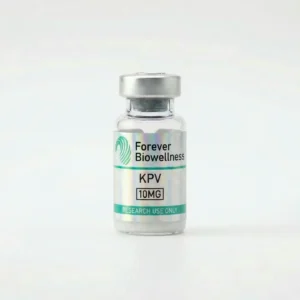
GHK-Cu/KPV 50mg/20mg
$ 70
GHK-Cu / KPV Blend
50mg GHK-Cu / 20mg KPV
Advanced Skin & Tissue Research Peptide Blend
GHK-Cu / KPV is a research peptide blend combining two compounds with complementary areas of scientific interest involving skin biology, tissue remodeling, inflammatory signaling, and cellular recovery.
GHK-Cu is extensively researched for its involvement in collagen synthesis, fibroblast activity, extracellular matrix remodeling, antioxidant pathways, and tissue-repair mechanisms. KPV has attracted significant research interest for its relationship with inflammatory signaling, cytokine regulation, immune-response pathways, and tissue recovery.
Together, these compounds provide a broad research profile spanning both structural and inflammatory aspects of skin biology.
This blend contains 50mg of GHK-Cu and 20mg of KPV and is independently third-party lab tested to verify identity and applicable analytical standards.
Out of stock
Bulk and Kit Pricing Available, Contact Us For Details.
Description
Scientific Background
GHK-Cu and KPV have each been investigated across multiple areas of skin, tissue, and inflammatory research.
GHK-Cu has generated substantial scientific interest for its involvement in processes associated with collagen production, fibroblast activity, extracellular matrix remodeling, antioxidant activity, and tissue repair. Research has also explored its relationship with skin elasticity, firmness, photodamage, pigmentation, and age-related changes in skin structure. 
KPV is a naturally occurring tripeptide fragment of alpha-MSH that has been investigated primarily for anti-inflammatory and immune-signaling mechanisms. Research has explored its effects on inflammatory cytokine pathways, cellular stress, barrier function, and tissue-recovery processes. 
Notably:
- GHK-Cu has been extensively investigated for collagen synthesis and extracellular matrix remodeling.
- Research has examined GHK-Cu’s involvement in fibroblast and keratinocyte activity, tissue repair, antioxidant pathways, and regenerative signaling.
- GHK-Cu research has included areas relevant to skin aging, photodamage, hyperpigmentation, elasticity, firmness, and overall skin structure. 
- KPV has attracted research interest for inflammatory cytokine signaling and regulation of inflammatory responses.
- KPV research has included skin inflammation and keratinocyte-related models in addition to broader inflammatory research. 
- Current research continues to investigate both peptides in tissue-repair, inflammatory, and regenerative models.
These complementary research profiles make GHK-Cu / KPV an interesting formulation for laboratory investigation involving multiple biological processes associated with skin and tissue biology.
Areas of Dermatological Research Interest
The biological pathways associated with GHK-Cu and KPV overlap with several areas of dermatological research involving inflammation, tissue remodeling, oxidative stress, cellular signaling, and skin-barrier function.
Research areas of interest include:
- Atopic dermatitis and eczema-related inflammatory pathways
- Rosacea and inflammatory skin signaling
- Psoriasis-related inflammatory pathways
- Acne and inflammation-associated skin processes
- Contact dermatitis and skin irritation models
- Inflammatory dermatitis research
- Skin-barrier dysfunction
- Wound healing and tissue-repair models
- Photodamage and UV-associated skin changes
- Age-related changes in collagen and extracellular matrix function
- Inflammation-associated tissue damage
These conditions and research areas involve overlapping biological processes such as inflammatory cytokine activity, oxidative stress, immune signaling, barrier disruption, and abnormal tissue remodeling.
GHK-Cu provides significant research interest in the structural and regenerative side of these processes, including collagen, fibroblast activity, extracellular matrix remodeling, and tissue repair. KPV contributes an additional area of research focused on inflammatory signaling and immune-response regulation.
Importantly, these represent areas of biological and laboratory research interest rather than established clinical indications for the GHK-Cu/KPV combination. The two peptides have primarily been studied individually, and direct research on this specific 50mg/20mg combination remains limited.
Why Researchers Select GHK-Cu / KPV
- Combines 50mg GHK-Cu with 20mg KPV
- Dual-peptide approach to skin and tissue research
- GHK-Cu investigated for collagen, elastin, and extracellular matrix pathways
- Research interest in fibroblast and keratinocyte activity
- GHK-Cu investigated in tissue remodeling and repair models
- KPV researched for inflammatory cytokine and immune-signaling pathways
- Research interest in skin inflammation and barrier-related mechanisms
- Investigated across regenerative, inflammatory, and tissue-recovery research models
- Combines complementary structural and inflammatory research pathways
- 70mg total peptide content per vial
Complementary Research Profiles
GHK-Cu and KPV contribute distinct areas of scientific interest.
GHK-Cu is primarily associated with research involving collagen synthesis, fibroblast activity, extracellular matrix regulation, antioxidant pathways, and tissue remodeling. Its broad biological profile has made it a longstanding subject of regenerative and dermatological research. 
KPV contributes research interest involving inflammatory signaling, cytokine regulation, immune-response mechanisms, and cellular recovery. Preclinical research has particularly investigated its anti-inflammatory activity and its potential relevance to tissue and barrier biology. 
The combination therefore brings together two distinct research areas: tissue structure and remodeling through GHK-Cu, and inflammatory signaling through KPV.
This makes the GHK-Cu / KPV Blend a versatile research formulation for investigating skin structure, collagen pathways, extracellular matrix activity, inflammatory signaling, tissue recovery, and regenerative biology.
Product Specifications
- 50mg GHK-Cu / 20mg KPV per vial
- 70mg total peptide content
- Independently lab tested for applicable analytical standards
- Supplied as high-purity lyophilized powder
- Requires reconstitution prior to laboratory use
Storage & Stability
- Store lyophilized vial in freezer conditions until use
- Maintain 2–8°C and protect from light
- Refrigerate after reconstitution
- Utilize within standard laboratory handling timelines
Research Use Notice
This product is intended strictly for laboratory research purposes only. Not for human consumption, therapeutic use, or veterinary application.
Only logged in customers who have purchased this product may leave a review.
Related products
-
-
Select options This product has multiple variants. The options may be chosen on the product page
- Longevity and healthy aging, Recovery and repair, Skin and beauty
GHK-CU
- Price range: $ 45 through $ 65
-
-
Reviews
There are no reviews yet.